Different Types of Knee Scooters and How to Choose the Right One
Getting any kind of injury is frustrating, and to top things off the recovery process can also be a long process. When you are trying to recover, you avoid putting weight on your injured side and to help with that many people use crutches. However, crutches can feel awkward and tire you fast which is why most people today prefer knee scooters. They are a safer and comfortable way to move around when you are recovering from an injury.
However, you must keep in mind that knee scooters come in different types. Some are built for indoor use while others work better on outdoor surfaces. To choose the right one you must know the different types of knee scooters and how they are different from each other. It is essential to choose the right type of knee scooter if you want a smoother overall recovery.
Why Choosing the Right Knee Scooter Matters
When you’re healing from a leg or foot injury, comfort and stability are everything. The right knee scooter helps you recover safely and confidently.
Comfort and stability during recovery depend on model design and features
Each knee scooter is designed a little differently. Some have larger wheels for better balance, while others are lighter and easier to handle indoors. Picking a model that suits your needs helps reduce strain on your body and prevents awkward movements that could slow your recovery.
A well-fitting scooter also means you can go about your day with fewer limits whether that’s cooking, running errands, or simply moving around your home.
The right scooter helps prevent strain on your injured leg and supports safe mobility
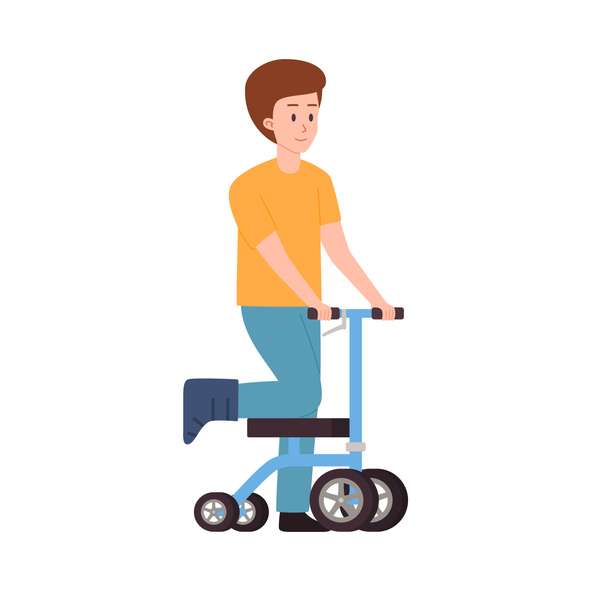
A good knee scooter takes pressure off your injured leg entirely. It allows you to rest your knee comfortably on the padded platform while using your stronger leg to propel yourself forward.
Using the wrong model, however, can lead to discomfort or even new aches in your back, shoulders, or good leg. That’s why it’s important to pick a scooter designed for your body size, mobility level, and environment.
Standard, All-Terrain, and Seated Knee Scooters: What’s the Difference?
There are three main types of knee scooters you’ll find when shopping: standard, all-terrain, and seated. Each has its own advantages depending on where and how you plan to use it.
Standard Knee Scooters
If you’ll mostly be using your scooter indoors or on smooth surfaces, a standard knee scooter is likely your best match. These models are lightweight, easy to maneuver, and designed for everyday convenience.
They usually feature smaller solid wheels, which roll smoothly on tile, hardwood, or carpet. Because of their compact size, they’re perfect for moving through tight spaces like hallways, offices, or kitchens.
You’ll also find that standard models tend to fold easily, making them ideal for travel or quick storage.
Best for: Indoor use, recovery at home, or flat, smooth surfaces
All-Terrain Knee Scooters
If you’re someone who spends a lot of time outdoors, or your home has uneven flooring, an all-terrain knee scooter might be a better fit.
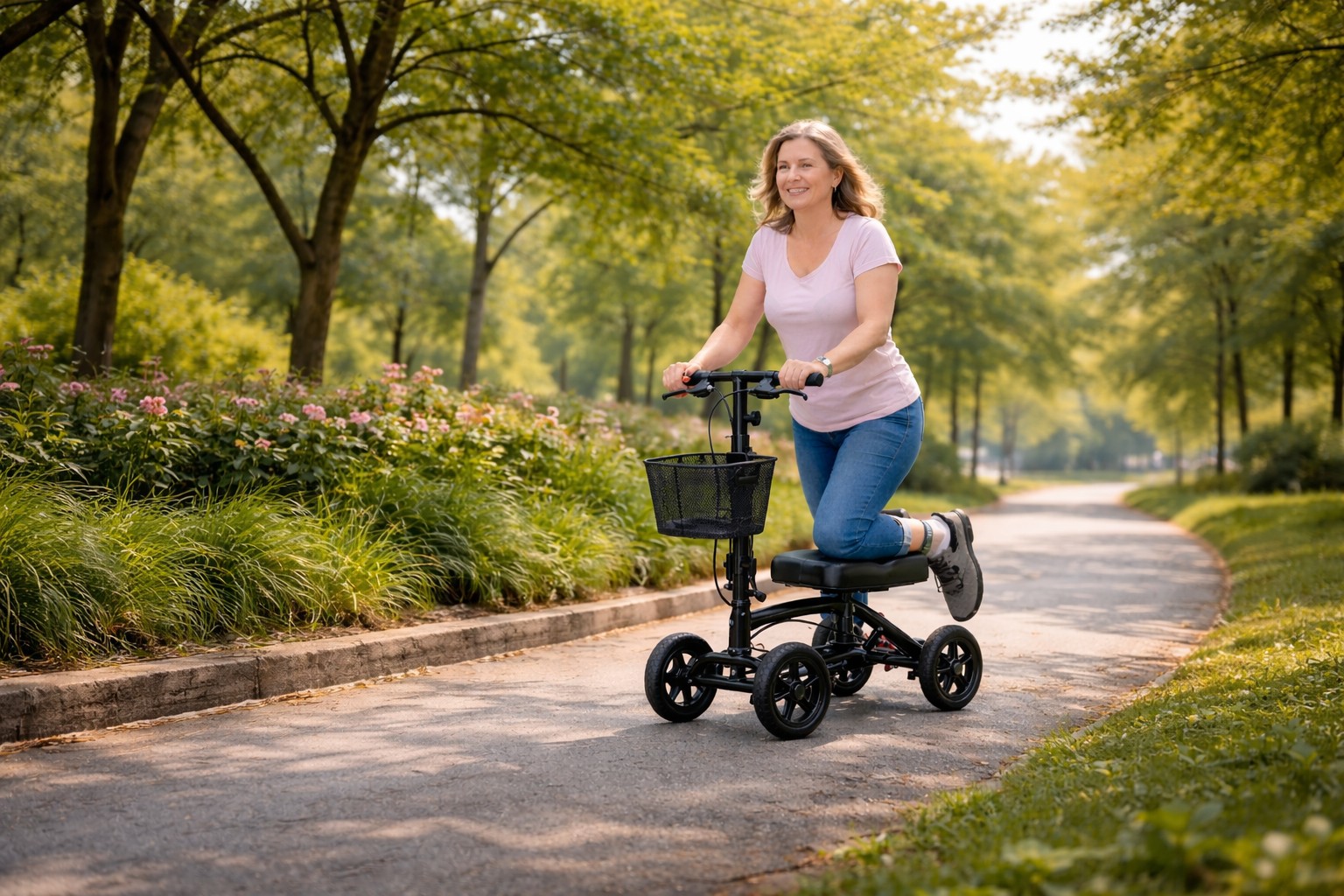
These models come with larger, air-filled tires that can handle rough or bumpy ground like grass, gravel, or pavement. The design offers greater stability and shock absorption, so you can move more smoothly without worrying about tipping or jolts.
All-terrain scooters are a little heavier, but their extra durability is worth it for anyone who wants freedom beyond flat indoor spaces. They’re especially helpful if you need to go outside for errands, appointments, or walks.
Best for: Outdoor use, uneven surfaces, or active lifestyles
Seated Knee Scooters
For some people, standing for long periods just isn’t comfortable, especially if balance or fatigue is a concern. That’s where seated knee scooters come in.
Instead of kneeling, you sit on a cushioned seat and use your legs to move forward. This design takes even more pressure off your injured leg while allowing you to rest fully as you move.
Seated models are great for longer recovery periods or for individuals with balance challenges. They’re often used in situations where stability and comfort matter more than speed or compactness.
Best for: Longer recoveries, balance issues, or users who can’t stand for long
Key Features to Consider When Comparing Models
Once you’ve narrowed down which type of scooter fits your needs, it’s time to look at the features that make your experience even better.
Adjustable handlebars and knee pad height for a personalized fit
Everyone’s height and posture are different. Look for a model that lets you adjust both the handlebars and knee pad so you can maintain a natural, upright position. This helps prevent back or shoulder strain and makes steering more comfortable.
Weight capacity, wheel size, and turning radius for maneuverability
A scooter’s weight capacity affects how stable and durable it feels. Make sure to choose one that supports your body weight comfortably.
Larger wheels make it easier to roll over small bumps or door thresholds, while a tight turning radius is perfect for maneuvering in smaller spaces like hallways or offices.
Storage baskets, folding frames, and brakes that enhance convenience and safety
Little details go a long way. A basket lets you carry your essentials hands-free, so you can grab a snack, your phone, or a water bottle without hassle. A folding frame is handy if you need to transport your scooter in a car or store it when not in use. Don’t forget brakes, dual hand brakes offer extra control when turning or going downhill, keeping you steady and secure.
When to Upgrade or Replace Your Knee Scooter
Even the best scooter needs attention over time. Knowing when to upgrade or replace your model ensures you stay safe and comfortable throughout recovery. Sometimes, your needs simply change as your recovery progresses. Maybe you started with a basic indoor scooter but now need something sturdier for outdoor use. Or perhaps your original model feels less stable after weeks of daily movement. Regular wear and tear like loose brakes or uneven wheels can also affect safety and comfort. Upgrading ensures smoother rides, better balance, and fewer aches from awkward positioning. Think of it as part of your healing journey: just like your body needs care and adjustments, so does your equipment. A well-maintained, properly fitted scooter keeps you moving confidently and helps your recovery stay on track.
If you feel unstable or uncomfortable after a few days of use
Your scooter should feel natural and supportive. If you’re struggling to balance, or the handlebars or knee pad feel off, it might not be the right fit. Upgrading to a better-suited model can make a big difference.
When signs of wear appear — squeaky wheels, stiff brakes, or wobbly handlebars
These are small issues that can grow into safety risks if ignored. Regularly check your scooter’s moving parts and brakes. If something feels loose or worn, it’s time for a tune-up or replacement.
If your recovery location changes
Sometimes, your recovery environment changes, maybe you’re moving from indoors to outdoors, or from an apartment to a house with uneven paths. Switching to an all-terrain model or one with better stability can help you stay mobile in any setting.
Shop Quality Knee Scooters at EZ Walker
When it comes to choosing the right knee scooter, EZ Walker makes it easy to find a model that fits your needs, comfort, and lifestyle.
- Explore top-rated models for every type of recovery from standard indoor scooters to rugged all-terrain options.
- Compare designs to find the perfect balance of comfort, mobility, and support.
- Enjoy trusted quality and value, backed by a company that understands what smooth, stress-free recovery looks like.
Don’t let limited mobility slow you down. Shop knee scooters at EZ Walker and roll through your recovery with ease and confidence, one smooth glide at a time.