Types of Mobility Aids

Mobility aids empower individuals with mobility disabilities and challenges. These innovative devices have revolutionized the lives of millions, providing essential support and enabling individuals to navigate their environments with greater ease.
Mobility aids are essential devices that support and assist individuals with mobility challenges, enabling them to move around with greater ease and independence. These aids come in various forms, each designed to cater to specific needs and requirements. Below we will discuss the different kinds of mobility aids and their benefits to help you select the best mobility aid for your needs.
What is a Mobility Aid?
Mobility aids are specialized devices that support people who have mobility problems. People with disabilities, wounds or older adults who are more likely to fall tend to choose this mobility assistance. People who use mobility aids can experience many benefits.
They first feel more independent since these devices make it easier for them to walk around. Second, they make it more pleasant for people to carry out their everyday tasks by reducing discomfort. Thirdly, these aids help users feel more assured and competent in their mobility, which boosts their confidence and self-esteem.
To meet varied demands, a range of mobility aids are available. These tools include wheelchairs, which help with movement over longer distances, canes and crutches, which offer extra support while walking, and much more.
Why Are Mobility Aids Needed?
Mobility aids are beneficial for anyone who has a mobility issue, whether it is short-term or long-term. The kind of mobility device employed will depend on the user's requirements. People with the following temporary or permanent disabilities may benefit from mobility aids:
- Mobility impairment because of stroke or brain injury
- Blindness or visual impairment
- Sprains and strains
- Spina bifida
- Obesity
- Injury to the back, feet, or legs
- Lung or heart problems
- Gout
- Broken bones or fractures in the lower limbs
- Difficulty walking or keeping balance
- Diabetic wounds and ulcers
- Developmental disabilities
- Cerebral palsy
- Arthritis
Mobility aids are also beneficial for older adults, those who have had an amputation, and those recovering from surgery.
Mobility aids play a critical role in ensuring safety. Mobility aids can help people feel more independent, improve balance, take some of the body weight off the lower body, help with posture, and more.
Here are a few crucial things to consider if you need a mobility aid or are looking for mobility devices to add to your physical therapist's office.
Maintaining Self-Confidence through Autonomy
Mobility aids can give you the privacy you need when you shower or go to the bathroom. Having and employing the proper mobility aid can help one feel less dependent on others.
Preventing Slips and Falls
Mobility aids can help maintain the necessary support and reduce falls. You will be able to feel more at ease walking, taking a stroll, or going shopping when using mobility aids effectively. Mobility aids increase confidence and lower risks while giving people the independence to participate in their communities.
What are the Types of Mobility Aids?
A power-driven mobility device may improve lives, and you may have more options than you realize. Do not wait another day for help with accessibility issues; pick up the fundamentals of mobility aids immediately! Learning about these assistive devices can help you find the right mobility aid.
Here are some different types of mobility aids commonly used:
Knee Scooters

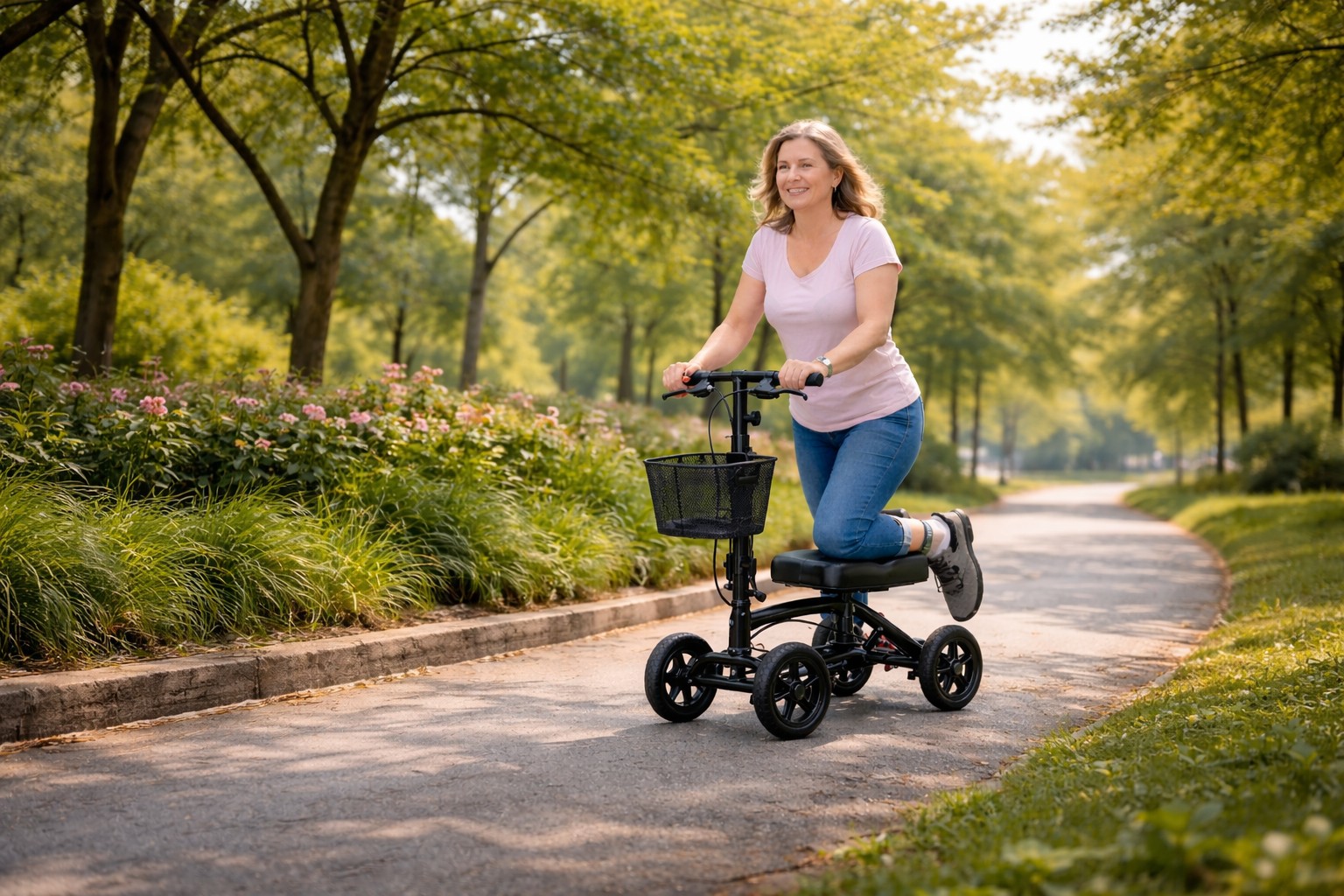
Knee scooters are innovative mobility aids that assist individuals with lower leg surgeries or injuries. These devices provide an alternative to traditional crutches or walkers, offering a more comfortable and convenient means of movement.
Knee scooters consist of a wheeled frame with a padded platform or knee rest where the injured leg is supported. The uninjured leg propels and steers the scooter, providing mobility while keeping weight off the injured leg.
Walkers

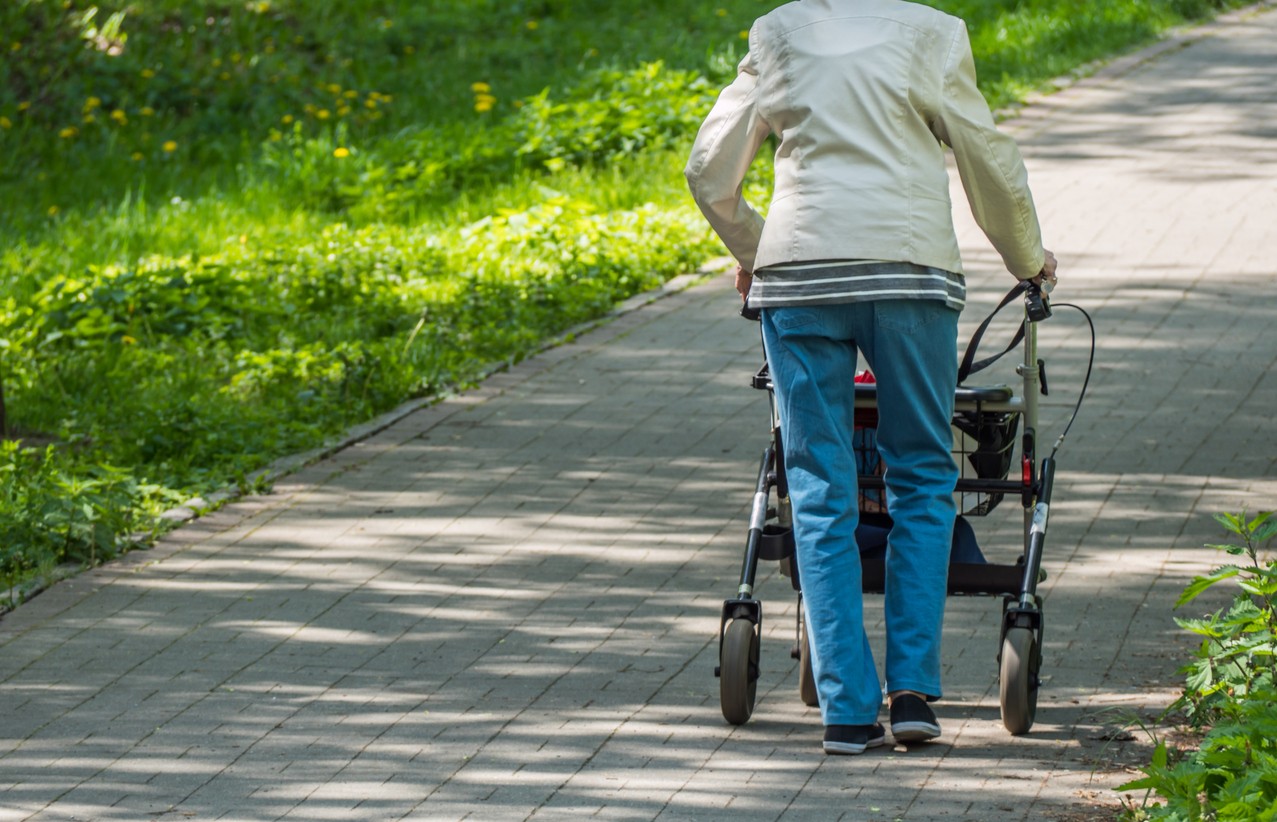
Walkers are sturdy frames with handles and four legs that provide increased stability and support. They are suitable for individuals who require more support than a cane can provide. Walkers may have wheels on the front legs, making them maneuverable. Some walkers also feature seats and brakes for added convenience.
Rolling Walkers
Rolling walkers, also known as wheeled walkers or rollators, are equipped with wheels on the front legs. These walkers provide enhanced mobility and maneuverability compared to traditional walkers. The wheels allow for smooth movement and make navigating various indoor and outdoor surfaces easier.
Folding Walkers
Folding walkers have a basic yet sturdy design. They consist of a lightweight frame with four legs and do not have wheels. One of the key advantages of folding walkers (also called standard walkers) is their foldable design.
They can be easily folded for storage or transportation, making them highly convenient for travel or storage in smaller spaces. Folding walkers are height-adjustable, allowing users to customize them to their desired height for optimal comfort and support.
Transport Chairs

Transport chairs, also known as companion chairs, are lightweight and portable mobility aids designed for short-distance transport of individuals with limited mobility. They are primarily pushed and controlled by caregivers or companions, providing a safe and comfortable means of transportation indoors.
With compact dimensions, a folding mechanism, and ergonomic features, transport chairs offer convenience, accessibility, and ease of use. These chairs prioritize user comfort and safety, making them an essential mobility aid for individuals who require assistance with mobility and rely on caregivers for transport.
Wheelchairs

Wheelchairs are mobility aids designed for individuals with significant mobility limitations. They come in two main types: manual and power-driven devices. Manual wheelchairs require the user to propel themselves using their arms, while powered wheelchairs are motorized, allowing for greater independence and reduced physical effort. Wheelchairs can be customized with various seating options, leg rests, and accessories to enhance comfort and functionality. Want to learn more about the difference between transport chairs and wheelchairs? Check out this blog.
Canes

Canes are simple, versatile mobility aids that provide walking stability and support. They are ideal for individuals with minimal assistance and mild balance issues. For easy storage and portability, canes come in different styles, including folding, quad, and standard canes.
Mobility Scooters
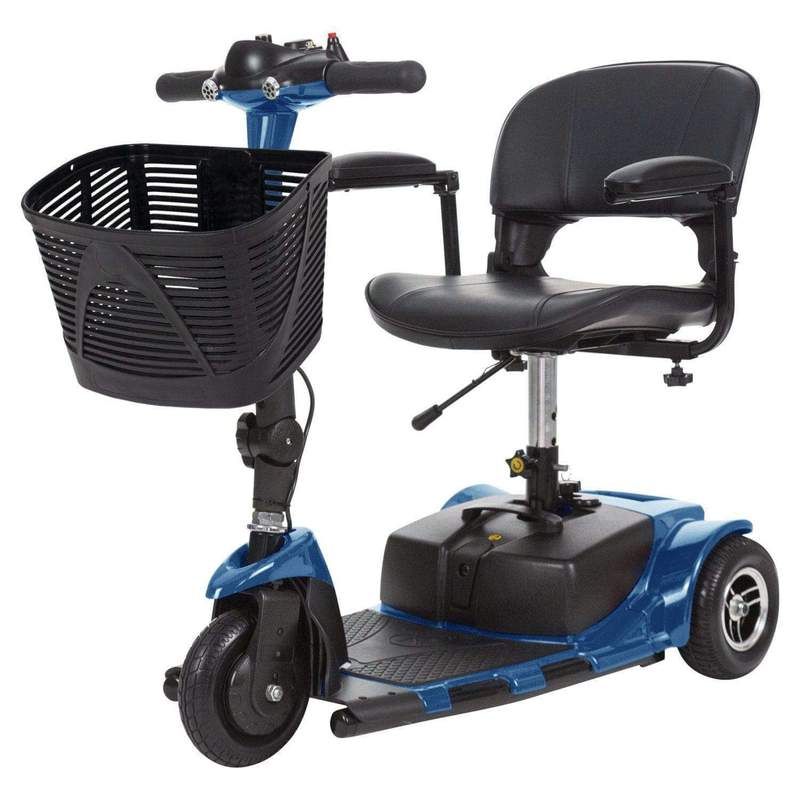
Mobility scooters are motorized mobility aids that provide individuals with limited mobility a convenient means of transportation. They consist of a comfortable seat, handlebars or a tiller for steering, and a battery-powered motor. Mobility scooters are designed for indoor and outdoor use, allowing users to easily navigate various terrains.
With their easy-to-operate controls, stability, and maneuverability, mobility scooters offer individuals with mobility limitations increased independence, freedom of movement, and the ability to participate in social activities. They are a practical and empowering mobility aid that enhances users' mobility and quality of life.
Benefits of Mobility Aids

From canes to walkers, wheelchairs to mobility scooters, the benefits of mobility aids are multifaceted, encompassing physical, psychological, and social advantages. Let's delve into some of these benefits and how they positively impact the lives of those who use mobility aids.
Increased Independence
One of the most significant advantages of mobility aids is the restoration and enhancement of independence. These aids provide stability, support, and balance, allowing individuals to perform daily activities with reduced reliance on others. For instance, canes or walkers provide walking aid through extra stability and prevent falls. They enable individuals to move around their homes, visit stores, or participate in social activities independently.
Enhanced Mobility and Accessibility
Mobility aids offer transportation and increased accessibility, expanding the horizons of individuals with mobility limitations. Wheelchairs and mobility scooters, for example, allow users to navigate both indoor and outdoor spaces, promoting active participation in community events, outdoor adventures, and social gatherings that may have been previously challenging or impossible.
Improved Physical Health
Mobility aids can improve physical health by facilitating regular exercise and reducing strain on joints and muscles. They enable individuals to engage in mobility-enhancing activities such as walking, stretching, or attending physical therapy sessions. By maintaining an active lifestyle, users can enjoy the benefits of increased cardiovascular health, muscle strength, and flexibility.
Reduced Pain and Fatigue
Individuals with mobility challenges often experience pain and fatigue due to the strain caused by their limited mobility. Mobility aids, such as orthopedic supports, can help distribute weight evenly, relieving joint pressure and reducing pain. Additionally, assistive devices reduce the physical exertion required for movement, alleviating fatigue and conserving energy for other activities.
Psychological Well-being
The psychological benefits of mobility aids cannot be overstated. By providing increased independence, mobility aids enhance self-confidence and self-esteem, enabling individuals to actively participate in society. Moreover, these aids promote a sense of control, reducing anxiety and depression associated with limited mobility. Social activities, hobbies, and outings foster a positive outlook, improved mental health, and greater well-being.
Social Inclusion and Participation
Mobility aids facilitate social inclusion by eliminating physical barriers and enabling individuals to interact more easily. By providing mobility, these aids promote participation in community events, family gatherings, and social outings, fostering connections and reducing feelings of isolation or loneliness.
Shop our Mobility Aid Products Today!
The benefits of mobility aids extend beyond physical assistance, encompassing improved independence, accessibility, physical health, pain reduction, psychological well-being, and social inclusion. These aids empower individuals to overcome obstacles, pursue their goals, and live fulfilling lives. Shop the finest mobility aids today from EZ Walker!