Mobility Options After Foot Surgery | EZ Walker Rollators

Mobility scooters are incredible devices that help people get around. Whether you’re dealing with a chronic condition or recovering from foot surgery, these mobility aids help to improve the lives of millions. As scooters can speed up recovery following several different surgeries, foot surgery is one of the most common.
Today, there are many varieties of post-surgery scooters available. Furthermore, they’re becoming very popular! In fact, even Jackson State coach and former NFL star Deion Sanders has recently used a knee scooter for getting around following foot surgery. Coach Sanders was still coaching his college team while rolling around on his scooter!
While moving your body after foot surgery can be a hard time, a mobility scooter can help reduce pain and speed up the healing process.
Here are more benefits of a mobility scooter:
- They're cost-effective
- They take the stress off your joints
- They allow you to travel
- They're comfortable
- They're convenient
- There are many varieties available
- Several models can fold up for easy storage and transport
With all these advantages, it's no wonder why millions of people choose to ride mobility scooters. However, with so many different scooter options on the market, choosing the right scooter for your needs can be challenging.
In this article, we’ll discuss the wide variety of scooters available on the market today. We’ll talk about how these devices differ, their benefits, and what to consider before making a purchase decision.
5 Types of Post-Surgery Scooters
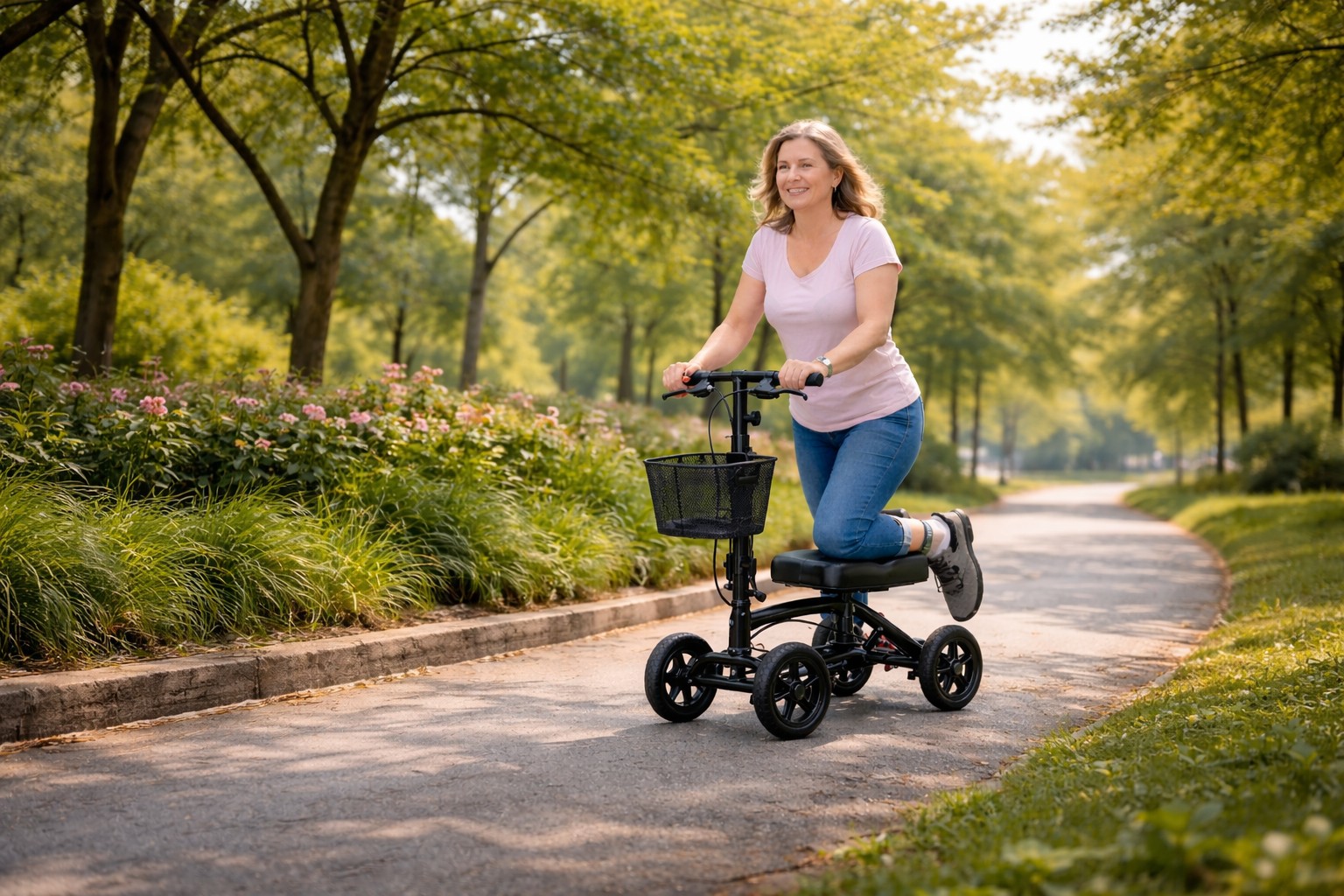
Following foot surgery, your healthcare provider may encourage you to use a knee scooter, also called a knee walker. Check out the different types available today:
1. Three-wheel

These knee scooters feature two wheels in the back and one in the front. While they're still considered a great mobility aid, they aren't as popular as four-wheel knee scooters. However, many users claim they're much easier to maneuver around. As there's only one front wheel, this allows for a tighter turning radius. Additionally, without four wheels, they're also very compact. This feature works well for people who travel often or don't have the space for a large scooter.
2. Four-wheel
Four-wheel knee scooters are the most popular scooters on the market. They come with two front wheels and two rear wheels. These scooters are stable, strong, and less prone to tipping. Additionally, as this type of steerable knee walker is very common, there are models with various features and price points. If you're recovering from ankle or foot surgery, a four-wheel scooter can be the ideal mobility device. However, as they have four wheels, they're more difficult to turn compared to the three-version.
3. All-Terrain

If you'll be taking your scooter on hiking trails and other rugged surfaces, consider choosing an all-terrain scooter. These come loaded with thick-tread wheels, designed to take your walker pretty much anywhere! From dirt paths to rocky trails, all-terrain scooters can handle it all. Not only can these devices help you travel more on rough surfaces, but they also keep you safer. The larger, more high-quality wheels mean you're less prone to falling.
4. Foldable or Collapsible

As the name suggests, users can simply fold up these scooters for easy transport and storage. Whether you're traveling in a car or storing your scooter in the closet, a foldable walker scooter can be the ideal option. Over the years, collapsible walkers have advanced greatly. They're sturdy, high-quality, and fold up in a matter of seconds. If you travel often or need the extra room in your home, consider picking up a foldable knee walker today!
5. Heavy Duty

Heavy-duty walkers are designed for those needing additional weight bearing features. These knee scooters are built with special capabilities to handle more weight. As the average scooter has a weight limit, heavyweight walkers are built for larger riders. These walkers may have a knee pad with more cushion, including larger wheels to offer more support. If you're considering purchasing a heavy-duty walker, be sure to check the weight capacity before buying.
Other Scooters On the Market

Other than knee walkers, there are a few other mobility scooters available. These are used by those recovering from ankle surgery, a foot injury, bunion surgery, injured leg, and more. While a knee scooter pushes forward with the help of your other leg, these other scooters are powered by a battery. This means you can move with the push of a button!
Here are the other types of scooters on the market:
1. Folding Scooters
A folding scooter works great for those who can't walk long distances. They may be fine with day-to-day walking around the house but may struggle when going for walks around the neighborhood. Folding scooters come with three or four wheels and feature a small battery, seat, and handle bars. They can easily collapse into a much smaller device, leading to simple transport and storage.
2. Travel Scooters
Travel scooters are ideal for those on trips or going on errands. If you're recovering from an injured foot or broken ankle, they can offer the convenience you need. While this seated scooter is larger than a folding scooter, they still fold up easily. These travel scooters can also come with storage compartments, lights, and other accessories.
3. Mid-size Scooters
If you want something with a more comfortable seat and additional features, consider a mid-size scooter. While in the seated position, this medical equipment allows the rider to prop up their injured foot, ankle, or leg in a comfortable position. Designed for the full-time rider, mid-size scooters are much more comfortable than travel and folding scooters. They also feature longer-lasting batteries and higher speed capabilities.
4. Full-size Scooters
Full-size scooters are considered the top-of-the-line option when it comes to scooters. These mobility aids come loaded with features, including high-quality wheels, storage baskets, long-lasting batteries, very comfortable seats, advanced braking systems, and more. Full-size scooters also usually have more leg room, providing more comfort when recovering from an ankle replacement, Achilles’ tendon surgery, or another foot or ankle injury.
Should I Rent or Buy a Scooter?
If you're in the market for a scooter, you may be wondering if buying or renting is the right approach. As buying a new scooter can cost thousands, you would hate to purchase one if it's not necessary. On the other hand, getting a scooter rental may also be costly if you need it for an extended period.
Reasons to Rent
- You only need the scooter for a short time
- You're unsure how long you'll need it
- You can't decide which scooter is right for you
- You can't afford to purchase a scooter now
- You don't anticipate further surgeries or injuries
Renting a new scooter can be the perfect solution for your needs. Luckily, there are several providers out there that carry dozens of high-quality scooter rentals.
Reasons to Buy
- You need a scooter for a long period
- You're having frequent surgeries
- You have a friend or loved one who could use the scooter after you
- It's recommended by your healthcare provider
- You've been having trouble walking for long periods
- You don't want to deal with the rental process
- You found a great deal
Before making your decision, be sure to understand your specific wants and needs.
How to Choose the Perfect Scooter

With so many different scooters out there, choosing one can be a difficult task. After all, you want to find a mobility aid that can help you make a full recovery in the shortest amount of time.
Look at what you should consider in order to find the ideal scooter:
1. Comfort
First, you want to be comfortable when riding around on your mobility device. While you may have a wrapped up surgical wound that leads to some pain, you don't want a scooter that causes more discomfort. As pain medication can only do so much, you need a comfortable scooter to aid in your recovery. Luckily, many models out there have comfortable seats with high-quality cushions.
2. Features
It's important to think about what features you need before buying or renting a scooter. Be sure to consider the following:
- Wheel size
- Number of wheels
- Storage compartments
- Lights
- Braking systems
- Seat style
- Power system
Before buying your scooter, make a list of which features matter most to you.
3. Style
With the wide variety of scooters available today, there are several different styles to consider. Luckily, as the industry has advanced, you can find sleek, elegant models that look exceptional! Instead of riding around in an old, bulky scooter, you can find a modern, stylish mobility aid!
4. Convenience
As you're shopping around, also think about convenience. After all, you want a knee walker or scooter to work for your specific needs. If you need a place to store your belongings, look for scooters with storage compartments. Also, if you need to keep your scooter in the trunk or closet, look for models that easily fold up.
Recovery Tips After Foot Surgery
While using a walking boot, participating in physical therapy, and buying a scooter can help you recover after foot surgery, there are some other things to keep in mind, which include:
- Rest and don't overexert yourself
- Eat a nutritious diet
- Elevate your foot above the hip to reduce pain and swelling
- Follow your surgeon's instructions
- Look out for any complications
As you're in your recovery, taking care of your body is essential. That said, you'll want to listen to your doctor and physical therapist for further recovery tips.
If you're searching for the best knee scooter for your specific needs, head on over to EZ Walker Rollators. Whether you suffer from deep vein thrombosis, chronic left foot pain, or you're recovering from foot surgery, we have the products for you! Check us out today.